
Cubic Odyssey
Related Games





Description
🔥 What is Cubic Odyssey
Cubic Odyssey is a bold and visually striking indie adventure game that combines the tactile satisfaction of puzzle-solving with the expansive freedom of exploration in a cubic, modular world. Developed by a small independent studio that focuses on experimental spatial mechanics, the game places players in a vibrant, low-poly universe where every environment, object, and character is constructed from interlocking cubes. Its aesthetic resembles a fusion of voxel art and surreal diorama design, resulting in a world that feels handcrafted yet boundless in its potential for interaction.
At its core, Cubic Odyssey tells the story of a traveler navigating a fragmented cosmos composed of floating cube islands, each representing a different biome or philosophical concept. The narrative unfolds wordlessly through environmental storytelling, where patterns, structures, and subtle visual cues suggest the remnants of civilizations that once tried to organize chaos into order. The game draws players in not through dialogue or exposition but through a sense of discovery, encouraging them to piece together the meaning behind each cube, mechanism, and constellation-like formation they encounter.
The experience evokes a sense of meditative curiosity rather than urgency, blending puzzle-solving, platforming, and light survival elements into a cohesive journey. Players must manipulate the cubic world itself rotating structures, rearranging pieces, and unlocking new pathways to progress through increasingly intricate layers of design and meaning.
👉 Features of Cubic Odyssey
Modular Puzzle Worlds
Cubic Odyssey’s primary innovation lies in its modular world design, where each level is a self-contained cube that can be rotated, dismantled, or recombined with others. This mechanic transforms exploration into a spatial riddle, requiring players to think not just about where to go next but how the world itself fits together.
Each cube behaves like a puzzle box, filled with hidden switches, rotating mechanisms, and perspective-based tricks. The satisfaction of solving these puzzles doesn’t come from arbitrary clues but from observing the natural geometry and logic of the world, teaching players to think in layers and dimensions.
Evolving Biomes and Environments
The game features a wide array of cubic biomes from crystalline deserts and molten cathedrals to mechanical jungles and floating archives of glass. Every biome introduces new mechanics tied to its elemental theme, encouraging adaptability and experimentation.
The transition between biomes feels seamless, with environmental storytelling linking their symbolic meaning. For instance, a desert cube may dissolve into fragments that form the foundation of an aquatic labyrinth, hinting at the cyclical nature of the universe’s construction and decay.
Physics-Based Manipulation
One of the most engaging aspects of Cubic Odyssey is its dynamic use of physics. Players can push, pull, and rotate cube segments in real time, influencing gravity, light, and even the behavior of in-game creatures. Some puzzles require stacking and aligning cubes to redirect energy beams or create bridges, while others involve timing and rhythm, like aligning shifting plates under pulsating light patterns.
This interplay between tactile control and visual feedback makes each solution feel earned and personal, rather than dictated by pre-set answers. The player’s hands on interaction with the cubic world forms a direct emotional connection to its transformation.
Wordless Narrative and Symbolism
Cubic Odyssey tells its story without spoken language, instead relying on visual motifs and recurring symbols. The architecture, creature design, and color palettes communicate an allegorical journey about creation, entropy, and balance.
Hidden murals within cubes depict mythic sequences, while certain puzzles subtly echo earlier moments, creating a reflective rhythm that ties gameplay progression to emotional resonance. The result is a narrative that feels universal and introspective, open to interpretation but undeniably cohesive.
Ambient Soundscapes and Musical Flow
The soundtrack in Cubic Odyssey is a dynamic blend of ambient textures, resonant synths, and natural sound loops that adapt to the player’s actions. Each biome has its own harmonic motif, which changes tone and tempo depending on your success or struggle.
This reactive sound design not only enhances immersion but also acts as a subtle gameplay guide, with audio cues indicating shifts in environment or puzzle states. The music flows like water, never overwhelming, always responsive turning exploration into a rhythmic meditation.
Gameplay
Exploration and Discovery
Cubic Odyssey’s exploration system rewards curiosity over linear progress. Each cube world connects to others through dimensional gates or folding mechanisms, forming a non-Euclidean map that expands as players solve more complex structures. The sense of moving through a world built from interlocking ideas rather than simple geography gives the journey a surreal yet logical flow.
Players can approach puzzles in multiple ways, and certain paths remain hidden until specific cubes are reoriented or combined. This freedom to experiment fosters a constant loop of discovery, where even failure feels productive because it reveals new layers of the world’s underlying logic.
Puzzle Mechanics and Interactivity
Puzzle design in Cubic Odyssey balances clarity with experimentation. Early challenges focus on basic rotation and alignment, while later sections introduce time manipulation, symmetrical reflection, and energy transfer. Some puzzles require synchronizing movement across multiple cubes, forcing players to visualize several dimensions at once.
The tactile sensation of interacting with the world grabbing a cube face, feeling resistance, hearing the soft click as it locks into place creates a satisfying rhythm of play. This physicality transforms abstract logic into an intuitive, sensory process that deepens player engagement.
Progression and Reward System
Progression in Cubic Odyssey isn’t based on traditional leveling or skill points but on mastery of environmental systems. Unlocking a new cube grants access to fresh perspectives literally, as players can rotate the cube to reveal hidden interiors or traverse unseen angles.
Rewards are primarily experiential: discovering a hidden biome, activating a dormant structure, or observing how light behaves differently when a cube’s geometry shifts. This design philosophy prioritizes curiosity and experimentation over grind or repetition.
Challenges and Optional Objectives
While the main path of Cubic Odyssey remains approachable, the game also offers optional challenge cubes that test the player’s understanding of its core principles. These intricate constructs feature mirrored layouts, inverted gravity, and recursive puzzles that wrap within themselves like digital Escher sculptures.
Completing them yields deeper lore fragments and visual rewards that subtly alter the world’s appearance. They serve as both endgame content and philosophical commentary, encouraging players to question the nature of structure itself.
Graphics
Cubic Aesthetic and Artistic Vision
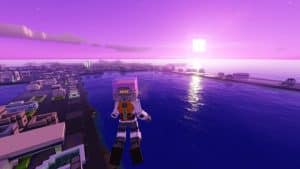
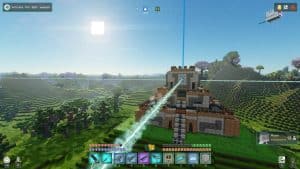
Cubic Odyssey’s visual identity revolves around its commitment to modular design and minimalist abstraction. Every object in the game from towering temples to tiny flora is built from cubes, yet the artistry lies in how those cubes are arranged to convey motion, scale, and emotion.
The result is a mesmerizing blend of simplicity and sophistication, where geometric precision meets organic beauty. Light refracts across cube surfaces in ways that mimic glass, stone, or metal, while particle effects emphasize transformation and disintegration. The art direction achieves a rare balance between mathematical order and emotional warmth.
Color, Lighting, and Atmosphere
Color plays a critical role in conveying narrative tone. Early environments glow with serene blues and golds, suggesting harmony and creation, while later biomes descend into stark reds and fractured whites, signaling entropy and collapse. Lighting is dynamic and symbolic, often responding to player actions by brightening when balance is restored or dimming when puzzles remain incomplete.
The interplay between color and geometry creates a painterly aesthetic that feels both modern and timeless, turning every cube into a brushstroke within a larger cosmic canvas.
Animation and Visual Effects
Animations in Cubic Odyssey emphasize transformation. Cubes unfold, twist, and reassemble with fluid transitions that blend mechanical precision and organic grace. Even the smallest details like dust motes catching the light as a structure shifts reinforce the illusion of a living, breathing world constructed from simple shapes.
Particle effects, motion blur, and volumetric fog all enhance immersion without sacrificing clarity. Despite its minimalism, the visual experience remains rich and dynamic, constantly evolving as players manipulate the world’s structure.
Pros and Cons
✔️ Pros
- Deeply original cube-based puzzle design that rewards spatial reasoning and creativity
- Striking minimalist art style with emotional and symbolic depth
- Immersive sound design that reacts dynamically to gameplay
- Nonlinear exploration that encourages experimentation and discovery
- Wordless storytelling that invites personal interpretation and emotional engagement
❌ Cons
- Some puzzles can become overly abstract, leading to moments of frustration
- Lack of traditional narrative may alienate players seeking clear direction
- Limited character interaction or dialogue might reduce replayability for story-driven fans
ℹ️ Game information


⭐ Installation Instructions
- The game is fully complete, you just need to install it, so there is no need to unpack it or download it from other sources.
- Just run the Cubic Odyssey.exe installation file.
- Simply launch the game from shortcut desktop.
⚙️ System Requirements
✅ Minimum:
- OS: Windows 10 64bit
- Processor: Intel Core i5 2500 / AMD FX-4350
- Memory: 8 GB RAM
- Graphics: nVidia GTX 1060 / AMD RX 580 6GB VRAM
- DirectX: Version 11
- Network: Broadband Internet connection
- Storage: 6 GB available space
✅ Recommended:
- OS: Windows 10 64bit
- Processor: Intel Core i5 6500 / AMD Ryzen 3 1200
- Memory: 16 GB RAM
- Graphics: nVidia RTX 3060 / AMD RX 6600-XT 6GB+ VRAM
- DirectX: Version 11
- Network: Broadband Internet connection
- Storage: 6 GB available space
Images


Video
Best Rated Games
 Virtua Cop 21.88.0 SEGA
- Grand Theft Auto V1.0.3751.0/1.72 Rockstar North
- Hogwarts LegacyBuild 1420267 Avalanche Software
- UpdatedThe Sims 41.122.218.1030 Maxis
- People PlaygroundBuild 21984831 mestiez
- Grand Theft Auto: Vice City1.112 Rockstar Games
- UpdatedFarming Simulator 251.17.0.0 Giants Software
- Football Manager 202424.4.2 SEGA


