
UBOAT
Related Games





Description
🔥 What is UBOAT for PC
UBOAT is a deeply immersive submarine simulator developed by Deep Water Studio and published by PlayWay, designed to replicate the intense and often claustrophobic experience of commanding a German U-boat during World War II. This ambitious simulation blends elements of survival, strategy, and management, transforming the cold steel corridors of a submarine into a living, breathing ecosystem where every decision carries the weight of human life and wartime morality. Players take on the role of a captain responsible not only for the vessel’s mechanical performance but also for the psychological and physical well-being of the crew who live and die under his command.
Set in the turbulent waters of the Atlantic, UBOAT challenges players to balance the realism of naval warfare with the intimate human drama unfolding below deck. Missions range from stealthy reconnaissance and convoy hunting to desperate battles for survival when the hunter becomes the hunted. What makes UBOAT stand out among naval simulations is its dedication to portraying the U-boat as both a weapon and a prison, a place where isolation, exhaustion, and loyalty coexist within the same steel shell.
More than just a game about torpedoes and tactics, UBOAT is a game about people. Each crew member has unique traits, habits, and relationships that affect their performance and morale, adding an unexpected emotional dimension to the simulation. The player’s success depends not only on technical skill but also on leadership, empathy, and the ability to maintain sanity in the depths of the Atlantic.
👉 Features of UBOAT
Realistic Submarine Simulation
UBOAT offers an intricate simulation of submarine operations, from navigation and targeting systems to managing oxygen, fuel, and battery levels. Every system in the boat is modeled with care and accuracy, requiring players to understand real naval mechanics rather than relying on arcade shortcuts. Damage control, periscope usage, sonar evasion, and depth management all play crucial roles, forcing players to constantly monitor conditions and make strategic choices under pressure.
The developers have taken inspiration from real historical documentation, ensuring that every control panel, gauge, and procedure feels authentic. When the boat dives, you can almost feel the pressure build as water closes in above you and the hull creaks with tension. It’s a hauntingly beautiful and technically impressive achievement that rewards patience and attention to detail.
Crew Management and Human Simulation
Beyond mechanical systems, UBOAT introduces a surprisingly deep human simulation layer. Each crew member has needs, emotions, and fatigue levels that must be managed. They eat, sleep, argue, and occasionally panic, reflecting the psychological toll of long missions at sea. The captain must maintain discipline, distribute tasks efficiently, and even deal with moral dilemmas like whether to rescue survivors or conserve supplies for the crew.
This system transforms the experience from a mere technical challenge into a dynamic story of survival. Crew members can suffer from stress or illness, and their performance directly impacts the efficiency of repairs, targeting, and navigation. The sense of responsibility you feel for your men is palpable, making success not just a tactical victory but a human one.
Sandbox and Open-World Exploration
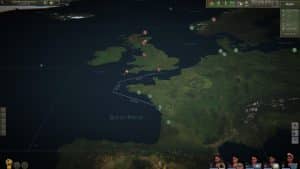
Unlike most scripted simulators, UBOAT features an open-world campaign where you choose missions and objectives freely. The Atlantic Ocean becomes your vast playground, filled with merchant convoys, naval patrols, and shifting weather patterns that can make or break a mission. Players can chart their own course, intercept enemy fleets, or even return to port for resupply and upgrades.
This level of freedom introduces a strong element of strategy and replayability. You might spend hours stalking a convoy undetected, only to have a storm scatter your prey or a destroyer pick up your trail. The unpredictability keeps every voyage tense and unique, and the sense of accomplishment after a successful patrol is unmatched.
Detailed Damage and Resource Systems
Every leak, fire, and malfunction matters in UBOAT. When depth charges detonate nearby, you must send crew members scrambling to patch hull breaches, pump out water, and restore vital systems before the sub collapses under pressure. Managing limited resources like fuel, food, and torpedoes becomes a constant balancing act, emphasizing long-term planning and crisis management.
These systems give UBOAT its incredible sense of realism and immersion. Success often depends not on aggression but on calm, precise decision-making during chaos. It’s a simulation that rewards knowledge, nerve, and adaptability.
Historical Accuracy and Immersive Atmosphere
UBOAT’s dedication to historical authenticity extends beyond the machinery. The uniforms, dialogue, and mission types reflect real events and naval procedures from the era. The environments are rendered with striking realism, from the flickering lights of the control room to the cold, dark expanse of the sea. The sound design deserves special mention: the rhythmic hum of engines, sonar pings, and distant explosions create a soundscape that captures the eerie isolation of underwater warfare.
The game’s attention to detail transports players into the era, allowing them to experience both the tactical thrill of submarine warfare and the moral ambiguity of serving under the Nazi regime. It’s not propaganda it’s a raw, unflinching portrayal of survival in a brutal historical context.
Gameplay
Life on Board and Daily Routine
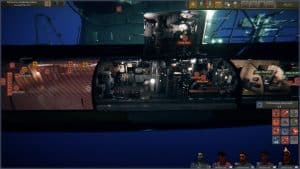
The gameplay in UBOAT revolves around managing the delicate balance between human endurance and mechanical efficiency. Every day aboard the submarine is filled with small but essential routines: checking pressure gauges, inspecting torpedo tubes, rationing food, and keeping morale high. You can walk through the cramped interior, watching crew members perform their duties or rest in their bunks, which creates a powerful sense of intimacy and realism.
The constant background tension is almost physical. Even during calm stretches, the silence feels heavy, as if the ocean itself is holding its breath. Every sound—a distant propeller, a ping on sonar can send a wave of fear through the crew. This ever-present anxiety defines the UBOAT experience.
Combat and Tactical Depth
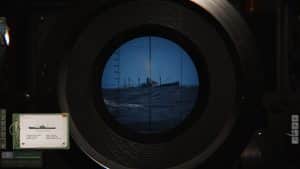
When the hunt begins, UBOAT transforms from quiet management into a tense tactical simulator. Players use hydrophones and periscopes to detect targets, calculate firing solutions manually, and decide whether to attack or evade. Every engagement is a high-stakes puzzle, where precision and timing mean the difference between glory and destruction.
Depth charges from enemy destroyers create moments of pure panic, as explosions rock the hull and instruments fail. You’ll find yourself shouting mental orders, diving deeper, cutting engines, and praying that the enemy loses your trail. Few games replicate the feeling of being both predator and prey so effectively.
Open-Ended Campaign Progression
The campaign is non-linear, allowing players to rise through the ranks and improve their submarine with new equipment and upgrades. Reputation gained through successful missions opens up new opportunities and access to better supplies. However, failure carries heavy consequences returning home with a damaged sub or lost crew affects morale and resources.
Every patrol tells its own story. Maybe you strike down a massive convoy and return to cheers in port, or maybe you limp back to base after barely surviving a depth-charge attack. The emergent storytelling is what makes UBOAT truly special.
Graphics
Immersive Visual Design
UBOAT’s graphics are striking not because of flashy effects, but because of how grounded and atmospheric they are. The interior of the submarine is a masterpiece of claustrophobic design, with flickering lights, creaking pipes, and worn textures that make every surface feel lived-in. Water droplets slide down metal walls, and steam fills the air after repairs, creating a sense of physicality that pulls you into the setting.
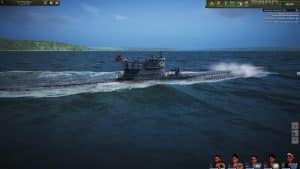
The developers have mastered the art of subtlety. Instead of overloading the screen with effects, they use lighting and shadow to build tension and realism. Watching your sub glide silently beneath moonlit waves is breathtaking, and the contrast between calm and chaos is visually stunning.
Environmental Effects and Realism
The ocean in UBOAT feels alive, with dynamic weather, realistic wave physics, and time of day cycles that affect both visibility and strategy. Storms obscure vision but also offer cover from enemy patrols, while bright days make stealth nearly impossible. The way light refracts through periscope lenses or ripples over the water’s surface demonstrates remarkable technical finesse.
Each explosion, each crack of pressure against the hull, is rendered with cinematic precision. It’s a game that thrives on atmosphere, and its visuals perfectly complement the dread and beauty of underwater warfare.
Pros and Cons
✔️ Pros
- Deep and authentic submarine simulation with realistic systems and procedures
- Strong human management mechanics that add emotional depth
- Non-linear campaign with strategic freedom and replayability
- Outstanding atmosphere and sound design that enhance immersion
- Visually rich and historically accurate world
- High tension and emergent storytelling during missions
❌ Cons
- Steep learning curve for newcomers unfamiliar with submarine mechanics
- Occasional AI pathfinding and performance issues
- Limited scripted story content outside sandbox mode
- Can feel slow-paced for players seeking constant action
ℹ️ Game information
Release Date: 02/08/2024
Update Date: 13/12/2025
Version: v2025.2
Genre: Simulation
Platform: PC
Language: 


Weight: 71 GB
Additional info: New version includes all DLCs to date
⭐ Installation Instructions
- The game is fully complete, you just need to install it, so there is no need to unpack it or download it from other sources.
- Just run the UBOAT.exe installation file.
- Simply launch the game from shortcut desktop.
⚙️ System Requirements
✅ Minimum:
- OS: Windows 7/8/10 64bit
- Processor: Intel Core i3 3.1 GHz / AMD Phenom II X3 2.8 GHz
- Memory: 6 GB RAM
- Graphics: GeForce GTX 750 Ti 2GB
- DirectX: Version 11
- Network: Broadband Internet connection
- Storage: 71 GB available space
✅ Recommended:
- OS: Windows 7/8/10 64bit
- Processor: Intel Quad Core i7 3770K / AMD Ryzen 5 1600X
- Memory: 8 GB RAM
- Graphics: GeForce GTX 1060 6 GB
- DirectX: Version 11
- Network: Broadband Internet connection
- Storage: 71 GB available space
Images
Video
Developer's games

Best Rated Games
 Virtua Cop 21.88.0 SEGA
- Grand Theft Auto V1.0.3751.0/1.72 Rockstar North
- Hogwarts LegacyBuild 1420267 Avalanche Software
- UpdatedThe Sims 41.122.218.1030 Maxis
- People PlaygroundBuild 21984831 mestiez
- Grand Theft Auto: Vice City1.112 Rockstar Games
- UpdatedFarming Simulator 251.17.0.0 Giants Software
- Football Manager 202424.4.2 SEGA


