
The Last Caretaker
Related Games





Description
🔥 What is The Last Caretaker for PC
The Last Caretaker is a slow-burning narrative adventure game that blends atmospheric exploration with psychological storytelling, immersing the player in the haunting solitude of a forgotten forest retreat. Developed by Planet of Dreams and published for PC, the game tells the story of a caretaker sent to watch over an abandoned nature reserve where time seems to fold in on itself, and the boundary between memory and reality begins to dissolve. Its central premise revolves around caretaking not only the crumbling facilities but also the emotional remnants of lives that once inhabited the place, creating an experience that is both deeply introspective and quietly unsettling.
The game positions itself somewhere between a walking simulator, a meditative exploration experience, and a light puzzle narrative. Instead of bombarding the player with objectives or enemies, it draws them into its world through sound design, subtle environmental storytelling, and a deliberate pace that invites reflection. It is a game about isolation, decay, and the strange beauty of forgotten places a piece of interactive fiction that prioritizes emotional atmosphere over mechanical complexity.
👉 Features of The Last Caretaker
A story built on silence and observation
The heart of The Last Caretaker lies not in what is said but in what is left unsaid. Players explore a large, abandoned wilderness station where each room, note, and broken tool tells fragments of a larger story. The narrative unfolds organically through discovery and inference, allowing the player to build meaning from the landscape itself rather than from cutscenes or explicit exposition. This approach creates a uniquely personal kind of storytelling one that feels intimate, melancholic, and entirely shaped by the pace at which the player chooses to explore.
Environmental storytelling that rewards patience
Every corner of the reserve hides traces of a vanished world: a rusted lantern, a name scratched into wood, a forgotten diary page. The developers use environmental details to evoke emotion instead of relying on dialogue, making exploration feel purposeful even in the absence of explicit tasks. The game’s rhythm mirrors the quiet persistence of nature reclaiming what was once human, and every discovery feels like uncovering a small piece of someone’s lost life.
Sound and atmosphere as primary tools of immersion
Instead of traditional music, The Last Caretaker uses ambient natural sounds wind in the trees, creaking floorboards, the echo of distant water to build tension and emotion. Occasionally, faint melodies drift through the environment, blending seamlessly with environmental sounds and heightening the sense of memory and time. The soundscape is integral to the storytelling, making players feel simultaneously peaceful and uneasy, as if the forest itself were breathing around them.
Visual storytelling and minimal interface
The interface is stripped down to its bare essentials, encouraging immersion and curiosity. There are no minimaps, markers, or quest lists. The player relies on natural navigation and environmental cues to find their way. The visuals, dominated by soft lighting and weathered textures, serve as silent narrators each object and structure carries its own visual memory, reminding the player that decay can also be a form of beauty.
Gameplay
Slow exploration and meditative pacing
At its core, The Last Caretaker is about exploring a place that resists being fully known. The player moves at an unhurried pace, often walking through forests, cabins, and observation towers that whisper hints of past inhabitants. There are light interaction mechanics turning on lights, unlocking gates, restoring power but these serve primarily to anchor the narrative rather than to challenge reflexes or intellect. The joy comes not from solving puzzles but from feeling present within an abandoned world that feels hauntingly alive.
Interactive fragments of memory
Scattered throughout the reserve are objects that act as anchors for memory. When touched or examined, they trigger brief monologues, flashbacks, or distorted sounds, revealing glimpses of the caretaker’s inner world or the fate of those who came before. These fragments create a nonlinear narrative structure, allowing players to piece together the story in different ways depending on the order of discovery. The result is a story that feels fluid and personal, with each playthrough offering a slightly different emotional rhythm.
Subtle puzzle mechanics
Though the game avoids traditional puzzle-solving, certain moments require careful observation and logical thinking. Restoring power to an old generator, recalibrating weather instruments, or piecing together a broken radio introduces light mechanical layers that prevent the gameplay from becoming entirely passive. These tasks are rarely difficult, but they serve as meaningful pauses that encourage the player to slow down and engage more deeply with their surroundings.
Themes of isolation and caretaking
The emotional weight of The Last Caretaker lies in its theme of responsibility amid decay. The player’s task is not to fix everything but to bear witness to preserve what remains. This sense of quiet duty turns mundane tasks into rituals, imbuing simple acts like cleaning a window or sweeping leaves with profound emotional resonance. The game transforms routine maintenance into a metaphor for memory, grief, and the persistence of care in a world that has already moved on.
Graphics
A world shaped by light and weather
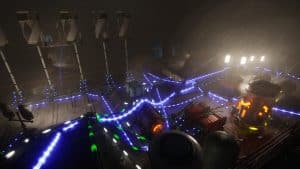
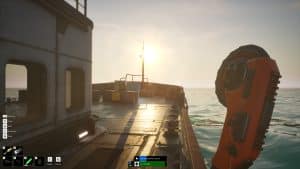
Visually, The Last Caretaker embraces a grounded and painterly realism that captures the tactile feel of abandoned places. The lighting engine gives each time of day a distinct emotional tone: the golden glow of dusk, the cold silver of early morning, the deep blue stillness of night. Weather effects such as rain, fog, and drifting pollen contribute to the game’s immersive atmosphere, making the world feel alive even in its desolation.
Architecture of decay and beauty
The art direction treats ruin as something poetic rather than grotesque. Wooden cabins sag under the weight of time, vines creep across concrete walls, and rust stains tell silent stories about neglect and endurance. This attention to texture and imperfection creates an emotional realism that invites empathy rather than horror. It is not a world meant to terrify, but to remind the player that beauty can survive even in places forgotten by everyone else.
Animation and subtle detail
Every animation in The Last Caretaker is deliberately restrained, designed to mirror the slowness of its world. The caretaker’s movements feel deliberate and human slowly opening doors, brushing dust off objects, lighting a fire to warm the room. Tiny details, like flickering reflections on water or dust particles catching sunlight, give the world an organic rhythm that complements its quiet narrative tone. The visual experience is less about spectacle and more about presence the feeling of being somewhere that has its own pulse.
Pros and Cons
✔️ Pros
- Deeply atmospheric storytelling that invites reflection and emotional engagement
- Beautiful environmental design and lighting that enhance immersion
- Soundscape that replaces music with emotional environmental depth
- Subtle mechanics that reinforce the narrative without distracting from it
❌ Cons
- Extremely slow pacing may alienate impatient players
- Minimal gameplay variety outside exploration and light puzzles
- Narrative ambiguity can feel unsatisfying to those seeking closure
ℹ️ Game information


⭐ Installation Instructions
- The game is fully complete, you just need to install it, so there is no need to unpack it or download it from other sources.
- Just run the The Last Caretaker.exe installation file.
- Simply launch the game from shortcut desktop.
⚙️ System Requirements
✅ Minimum:
- OS: Windows 10 64-bit
- Processor: Quad-core Intel / AMD, 3.2 GHz
- Memory: 16 GB RAM
- Graphics: NVIDIA GeForce GTX 1070 / AMD Radeon RX 5700
- DirectX: Version 12
- Network: Broadband Internet connection
- Storage: 30 GB available space
✅ Recommended:
- OS: Windows 10 64-bit
- Processor: Intel Core i5 / Ryzen 5, 3.5 GHz
- Memory: 32 GB RAM
- Graphics: NVIDIA GeForce 9600 GT Extreme
- DirectX: Version 12
- Network: Broadband Internet connection
- Storage: 30 GB available space
Images


Video
Best Rated Games
 Virtua Cop 21.88.0 SEGA
- Hogwarts LegacyBuild 1420267 Avalanche Software
- UpdatedThe Sims 41.122.218.1030 Maxis
- Grand Theft Auto V1.0.3751.0/1.72 Rockstar North
- Need for Speed: Carbon1.0 Electronic Arts
- Path of Exile 20.2.1 Grinding Gear Games
- Grow a Garden Roblox generator for PC and mobileRoblox Corporation
- ARK: Survival Evolved360.1 Studio Wildcard


