
Possessor(s)
Related Games





Description
🔥 What is Possessor(s)
Possessor(s) is a 2025 action-platformer and metroidvania developed by Heart Machine and published by Devolver Digital. The game is set in a dystopian quarantined megacity devastated by a mysterious catastrophe that has warped its inhabitants into hostile, possessed entities. Players follow two intertwined protagonists Luca, a teenage survivor, and Rhem, a demonic being bound to her body as they navigate the ruins, uncover the truth behind the disaster, and try to survive their uneasy coexistence. Possessor(s) blends fast-paced combat, fluid traversal, and emotional storytelling within an interconnected side-scrolling world.
The story unfolds as a fusion of science fiction and horror, filled with atmospheric decay, neon-lit ruins, and remnants of a world consumed by possession and madness. It captures the loneliness of a dying metropolis while weaving in themes of identity, trauma, and co-dependence. As you explore its labyrinthine streets, you’ll slowly realize that both Luca and Rhem are victims of the same event that destroyed everything around them and that their survival depends on mutual trust, even when that trust feels impossible.
👉 Features of Possessor(s)
Dystopian Sci-Fi Horror Setting
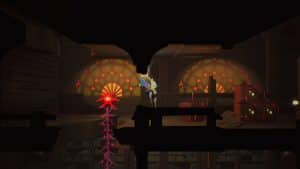
Possessor(s) takes place in a massive quarantined megacity where reality has fractured. Collapsed skyscrapers, submerged districts, and glowing anomalies make exploration visually stunning yet unsettling. The atmosphere constantly shifts between isolation and menace, creating a sense of quiet horror beneath the action.
The world feels alive in decay: rain drips through crumbling ceilings, lights flicker in abandoned offices, and distant shadows move where no one should exist. This attention to environmental detail transforms every level into a story about what humanity lost when possession consumed the city.
Dynamic Combat Inspired by Platform Fighters
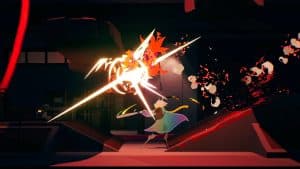
Combat in Possessor(s) is fast, stylish, and flexible, drawing clear inspiration from platform-fighters. Players chain aerial combos, dodge mid-air, parry incoming blows, and hurl environmental objects as makeshift weapons. The variety is astonishing: you can bash enemies with bats, throw silverware, or use electric cellphones as short-range stun devices.
Each fight feels like a kinetic dance between aggression and precision. Timing matters — a well-placed parry opens devastating counterattacks, and movement abilities like wall-runs or air dashes keep combat flowing. The system rewards improvisation, and the more risks you take, the more thrilling the encounters become.
Metroidvania-Style Exploration
The city is built as an interconnected network of vertical and horizontal zones. You’ll traverse through flooded subways, collapsed apartment towers, and eerie industrial caverns while unlocking new traversal tools such as wall-running, grapple hooks, or energy whips. Every upgrade not only enhances combat but also opens previously unreachable paths.
Exploration feels both rewarding and tense. Backtracking to earlier zones with new abilities reveals secret rooms, hidden upgrades, and fragments of the city’s lore. Even without dialogue, the level design tells stories about people who fought, fled, or simply vanished before the possession took hold.
Dual Character Narrative
At the heart of Possessor(s) lies the dynamic between Luca and Rhem. Luca’s human fragility contrasts with Rhem’s demonic ferocity, and the friction between them drives the narrative forward. Their uneasy alliance creates moments of humor, despair, and revelation as you uncover pieces of their past.
Through brief dialogue exchanges and environmental flashbacks, you begin to see how both characters mirror one another two broken beings forced into unity by catastrophe. Their psychological tension gives the game a unique emotional depth rarely seen in this genre.
Unique Visual Presentation
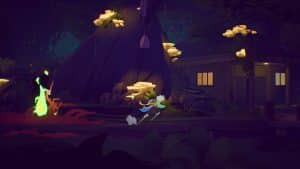
The game combines hand-animated 2D sprites with moody, fully 3D environments, producing a surreal visual contrast. Characters and enemies pop with expressive, fluid motion, while backgrounds feel weighty and decayed. The result is a living graphic novel come to life grimy, vibrant, and oddly beautiful.
Lighting and camera movement accentuate this hybrid style. Neon glows highlight combat zones, while subtle dynamic shadows emphasize isolation. The visual direction ensures that every frame of the game feels cinematic, even when the world itself seems broken beyond repair.
Gameplay
Exploration and Level Design
Possessor(s) features a sprawling world divided into interconnected regions. You might begin in the skeleton of a high-rise, descend into a flooded metro, and later surface in an overgrown industrial district. Each zone has its own hazards, shortcuts, and secrets that encourage patient exploration. Progression depends heavily on your mastery of movement wall-runs, air dashes, and grapple swings become second nature as you uncover more abilities.
The layout rewards curiosity but also punishes carelessness. Without a strong sense of direction, it’s easy to get lost amid the verticality of crumbling architecture. Yet that confusion adds to the atmosphere: you are meant to feel disoriented in a city that has lost its sense of order.
Combat and Upgrades
Combat thrives on experimentation and flow. Enemies range from corrupted humans to mechanical sentries overtaken by demonic growths. You’ll juggle between melee and improvised ranged attacks, chaining hits to fill a possession gauge that unlocks devastating finishers. Movement and aggression blend seamlessly you might leap off a wall, strike mid-air, parry a counterattack, then slam an enemy into environmental hazards.
Boss battles elevate these mechanics to intense duels that test your adaptability. Each major fight introduces new attack patterns and forces you to use every tool you’ve learned. Between encounters, collectible upgrades and hidden caches offer incremental power boosts that subtly alter your playstyle.
Storytelling and Emotional Themes
While the world of Possessor(s) is filled with horror and action, its narrative tone is surprisingly introspective. Through fragments of data logs, visual memories, and inner monologues, you piece together the tragic origins of the city’s downfall. The possession that ravaged the world mirrors Luca’s inner battle with Rhem a metaphor for self-conflict, guilt, and shared survival.
Moments of quiet reflection contrast sharply with the chaos of combat. These silences standing on a rooftop watching lights flicker across dead skyscrapers give the game emotional gravity. The result is a story not about triumph, but about endurance and the uneasy peace between opposing selves.
Graphics
Artistic Direction and Mood
Possessor(s) radiates a distinctive art style that merges sleek modernism with decaying industrial ruin. Every environment tells a story through color and composition. Cold blues and sickly greens dominate abandoned zones, while harsh reds and flickering neons mark areas under possession. The palette constantly shifts to reflect psychological tension and environmental danger.
The world design borrows from cyberpunk, post-apocalyptic fiction, and surreal horror imagery. The city looks both futuristic and ancient, filled with technology long dead yet strangely conscious. Even in stillness, you can sense movement smoke curling through glass, shadows pulsing behind walls, echoes of forgotten machinery.
Animation and Visual Effects
Characters are rendered in meticulously hand-drawn sprites with exaggerated motion arcs, giving every action weight and clarity. Combat animations are fluid, with parries sparking light trails and finishers exploding in kinetic bursts of color. Environmental effects dripping water, dust motes, flickering monitors build a sense of realism within the stylized world.
During intense fights, background elements react subtly to the chaos: debris trembles, screens distort, and energy fields ripple outward. These small touches make combat feel alive and reactive. Despite being 2D at its core, the game achieves an immersive sense of dimensional depth that keeps every frame visually engaging.
Technical Performance
The game runs smoothly even during complex combat scenes, maintaining high frame rates and responsive controls. Load times are minimal, transitions between zones are seamless, and input response is sharp essential qualities for a title that relies on precise timing. Occasional frame drops can occur during large boss battles, but they rarely affect playability.
Audio design further elevates the visuals. The soundtrack blends ambient electronic tones with percussive, haunting melodies that mirror the city’s duality mechanical yet emotional, alien yet familiar. Combined with the visual presentation, Possessor(s) achieves a strikingly cohesive atmosphere.
Pros and Cons
✔️ Pros
- Deeply atmospheric world that merges sci-fi and horror into a hauntingly beautiful setting
- Fast, expressive combat system with platform-fighter influences and a wide arsenal of improvised weapons
- Rewarding exploration loop with meaningful upgrades and hidden paths that encourage curiosity
- Dual-character dynamic between Luca and Rhem adds emotional and psychological complexity
- Striking hybrid art style combining 2D characters and 3D environments for a unique visual identity
❌ Cons
- Early difficulty curve can feel punishing, making progress slow for new players
- Navigation can be confusing due to limited map clarity and vertical level design
- Occasional repetition in enemy types and combat encounters
- Some background-foreground blending causes visual clutter during platforming segments
ℹ️ Game information
Release Date: 11/11/2025
Update Date: 09/12/2025
Version: v1.05
Genre: RPG / Simulation
Platform: PC
Language: 


Weight: 4 GB
Additional info: New version includes all DLCs to date
⭐ Installation Instructions
- The game is fully complete, you just need to install it, so there is no need to unpack it or download it from other sources.
- Just run the Possessor(s).exe installation file.
- Simply launch the game from shortcut desktop.
⚙️ System Requirements
✅ Minimum:
- OS: Windows 10 64bit
- Processor: Intel Core i5-3470 / AMD FX-8350
- Memory: 8 GB RAM
- Graphics: GeForce GeForce GTX 960 (4096 MB) / Radeon R9 380 (4096 MB)
- DirectX: Version 12
- Network: Broadband Internet connection
- Storage: 4 GB available space
✅ Recommended:
- OS: Windows 11 64bit
- Processor: Intel Core i7-6950X / AMD Ryzen 5 2600
- Memory: 16 GB RAM
- Graphics: GeForce GTX 1080 Ti (8192 MB) / Radeon RX Vega 56 (8192 MB)
- DirectX: Version 12
- Network: Broadband Internet connection
- Storage: 4 GB available space
Images

Video
Developer's games

Best Rated Games
 Virtua Cop 21.88.0 SEGA
- Grand Theft Auto V1.0.3751.0/1.72 Rockstar North
- Hogwarts LegacyBuild 1420267 Avalanche Software
- UpdatedThe Sims 41.122.218.1030 Maxis
- UpdatedFarming Simulator 251.17.0.0 Giants Software
- Football Manager 202424.4.2 SEGA
- Cyberpunk 20772.31 CD PROJEKT RED
- The Witcher 3: Wild Hunt4.04 CD PROJEKT RED


