
Phasmophobia
Related Games





Description
🔥 What is Phasmophobia for PC?
Phasmophobia is a cooperative horror investigation game developed and published by Kinetic Games, which places players in the unsettling role of ghost hunters exploring haunted locations filled with supernatural entities. The experience is built around psychological tension, voice-based mechanics, and cooperative teamwork, creating a slow-burn fear that grows naturally as you collect evidence and interact with unseen forces. Rather than relying on jump scares, Phasmophobia crafts a deeply immersive form of terror through subtle audio cues, unpredictable ghost behavior, and player communication that feels genuinely organic.
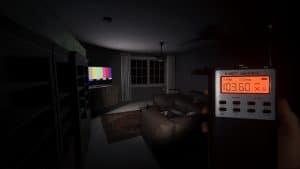
The game casts players as members of a small paranormal investigation team armed with a variety of ghost-hunting tools from EMF readers and spirit boxes to motion sensors and UV lights each designed to detect different aspects of paranormal activity. Every haunting features a procedurally generated ghost type, behavior pattern, and personality, making no two investigations alike and ensuring that fear never becomes routine.
Phasmophobia balances its realism with a dose of chaos and humor, especially in multiplayer sessions where teammates’ fear responses, jokes, and desperate screams create unpredictable moments. Beneath the surface-level fright, the game’s structure rewards observation, planning, and communication, offering a uniquely social approach to horror that few other titles can replicate.
👉 Features of Phasmophobia
Voice Recognition System
Phasmophobia stands out through its intelligent use of voice recognition, which allows players to communicate directly with the ghost through their microphones. The spirit box, for example, requires players to ask questions aloud sometimes provoking real responses that send chills down your spine. This system detects tone, phrasing, and even player names, making every verbal interaction a potential trigger for supernatural events.
What makes this mechanic so powerful is how it blurs the line between player and character. Speaking commands to your team while realizing that the ghost can also “hear” you introduces a new layer of tension that transforms simple conversations into acts of risk and fear.
Cooperative Multiplayer
Phasmophobia’s cooperative mode accommodates up to four players, encouraging teamwork and shared panic as you work to gather evidence of ghost activity. Players can divide responsibilities one handling cameras, another using EMF sensors, another managing sanity levels and every role feels essential.
While solo play is possible, the multiplayer experience captures the essence of found-footage horror: a mix of camaraderie, laughter, and genuine dread as friends confront the unknown together. The proximity voice chat system enhances this further by limiting how far voices carry, forcing groups to stick together or risk isolation in dark, haunted corridors.
Varied Ghost Types and Evidence System
The heart of Phasmophobia lies in its evidence-based gameplay loop, which challenges players to identify the ghost type through logic and observation. There are over twenty unique entities, each with distinct traits, from aggressive demons to shy spirits that only respond when you’re alone.
Every investigation involves collecting three key pieces of evidence like freezing temperatures, fingerprints, or ghost orbs to determine the identity. As you play, learning how different ghosts behave becomes vital, turning experience itself into a form of knowledge-based progression.
Expanding Locations and Equipment
Phasmophobia features an expanding roster of maps ranging from small suburban houses and eerie schools to vast asylums and cursed campsites. Each environment offers unique spatial challenges and acoustic dynamics, making sound and light management crucial for survival.
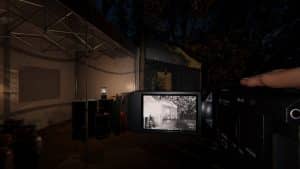
The growing arsenal of tools allows for creative problem-solving and deeper immersion. Flashlights, crucifixes, tripods, and motion sensors are just the beginning experienced players often build complex setups that resemble real ghost-hunting operations, blending strategy with chaos.
Progression and Customization
As players complete investigations, they earn money and experience to unlock new gear, higher difficulty levels, and optional challenges. The progression system motivates long-term play and makes each investigation feel meaningful.
Custom difficulty settings let you tweak elements like ghost aggression, sanity drain, and equipment costs, tailoring the experience from tense realism to chaotic survival horror. This flexibility keeps the game accessible for newcomers while offering veterans high-stakes hunts that test every skill learned.
Gameplay
Investigation and Team Roles
At its core, Phasmophobia is about slow, deliberate exploration and evidence gathering under pressure. Players begin each mission in a truck filled with equipment and must strategize who carries what, when to enter, and how to communicate. Once inside, the rhythm shifts between eerie silence and sudden, terrifying events.
Every sound, flickering light, or temperature drop becomes meaningful as you interpret clues to build a ghost profile. Successful hunts require coordination someone monitoring cameras from the truck, someone logging evidence, and someone braving the most haunted rooms alone.
Ghost Behavior and Hunts
Each ghost type has its personality, strengths, and weaknesses, which determine how it reacts to players. As investigations progress, activity escalates until a “hunt” phase begins, during which the ghost manifests physically and can kill. Players must quickly hide, stay silent, and turn off electronics to survive, creating some of the most heart-pounding moments in cooperative gaming.
This unpredictability is what makes Phasmophobia so addictive. Even after dozens of hunts, players remain cautious, aware that the next flicker of a light might be their last. No scripted event can match the intensity of realizing your friend’s radio has gone silent because the ghost caught them first.
Sanity, Fear, and Resource Management
A key mechanic is the sanity system, which gradually decreases as players spend more time in the dark or witness paranormal events. Low sanity increases ghost aggression, forcing players to balance exploration with self-preservation by using sanity pills or retreating to safe zones.
The interplay between fear and resource management ensures that every decision matters. Do you stay longer for that last piece of evidence, or escape alive with partial data? These moments of uncertainty drive much of Phasmophobia’s emotional power.
Graphics
Realistic Lighting and Atmosphere
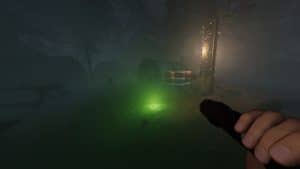
Phasmophobia’s visuals prioritize atmosphere over spectacle, using dynamic lighting and environmental detail to create tension. Each flicker of a bulb or faint mist in a corridor adds to the realism and dread. The flashlight beam feels both protective and fragile, revealing just enough to unsettle you.
The muted color palette and grainy textures evoke found-footage aesthetics, amplifying immersion and fear. Darkness is not just visual it’s a mechanic, shaping how players perceive danger and navigate uncertainty.
Sound and Environmental Design
Sound design is arguably the most powerful part of Phasmophobia’s presentation. Subtle creaks, whispers, and footsteps convey more horror than any jump scare. Spatial audio ensures that every sound feels directional, often tricking players into turning their heads or panicking prematurely.
Environmental storytelling also adds richness: scattered journals, cursed objects, and bloodstained messages hint at unseen tragedies. Even small details like radio static or distant knocks reinforce the illusion of a living, breathing haunting.
Performance and Technical Aspects
Despite being developed by a small indie team, Phasmophobia runs efficiently on most hardware, with scalable settings for both low-end and high-end PCs. Regular updates have improved optimization, added new content, and refined the VR mode for deeper immersion.
VR support, in particular, transforms the experience from unsettling to overwhelming, letting players physically handle tools, open doors, and cower in corners. The sense of scale and presence in VR amplifies every scare tenfold, making it one of the most intense horror experiences available.
Pros and Cons
✔️ Pros
- Deeply immersive and unpredictable horror experience that relies on atmosphere over cheap scares.
- Innovative use of voice recognition and proximity chat that enhances tension and realism.
- Engaging cooperative gameplay with strong teamwork and role coordination.
- Regular content updates, including new ghosts, maps, and tools.
- Optional VR mode offers unmatched immersion for horror fans.
❌ Cons
- Learning curve and pacing can feel slow for action-oriented players.
- Occasional bugs and glitches, especially in multiplayer sessions.
- Limited narrative depth outside of environmental storytelling.
- Visual fidelity remains modest compared to larger-budget horror titles.
ℹ️ Game information
Release Date: 18/09/2020
Update Date: 18/12/2025
Version: v0.15.1.0
Genre: Action
Platform: PC
Language: 


Weight: 21 GB
Additional info: New version includes all DLCs to date
⭐ Installation Instructions
- The game is fully complete, you just need to install it, so there is no need to unpack it or download it from other sources.
- Just run the Phasmophobia.exe installation file.
- Simply launch the game from shortcut desktop.
⚙️ System Requirements
✅ Minimum:
- OS: Windows 10 64bit
- Processor: Intel Core i5-4590 / AMD Ryzen 5 2600
- Memory: 8 GB RAM
- Graphics: NVIDIA GTX 970 / AMD Radeon R9 390
- DirectX: Version 11
- Network: Broadband Internet connection
- Storage: 21 GB available space
✅ Recommended:
- OS: Windows 10 64bit
- Processor: Intel Core i5-10600 / AMD Ryzen 5 3600
- Memory: 8 GB RAM
- Graphics: NVIDIA RTX 2060 / AMD Radeon RX 5700
- DirectX: Version 11
- Network: Broadband Internet connection
- Storage: 21 GB available space
Images

Video
Best Rated Games
 Virtua Cop 21.88.0 SEGA
- Hogwarts LegacyBuild 1420267 Avalanche Software
- UpdatedThe Sims 41.121.372.1020 Maxis
- UpdatedGrand Theft Auto V1.0.3751.0/1.72 Rockstar North
- Minecraft1.17.1 Mojang Studios
- Need for Speed: Payback1.0.51 Ghost Games
- Warcraft III: Reign of Chaos1.0 Blizzard Entertainment
- Minecraft Dungeons1.17.0.0 Mojang Studios


