
Diablo IV
Related Games


Description
🔥 What is Diablo IV for PC
Diablo IV is a dark fantasy action RPG developed and published by Blizzard Entertainment, serving as the long-awaited fourth installment in one of the most influential RPG franchises in gaming history. Set many decades after the events of Diablo III, the world of Sanctuary once again teeters on the edge of annihilation as the demonic Lilith, daughter of Mephisto, returns to corrupt humanity and reignite the eternal conflict between Heaven and Hell. Players take on the role of a wandering hero drawn into this chaotic world, where morality blurs and survival is a daily struggle against hordes of monstrous foes.
Built as both a return to the gothic horror roots of the series and a modern reimagining of its open-world structure, Diablo IV blends traditional dungeon-crawling with a vast, interconnected map. It combines visceral combat, intricate character progression, and an immersive narrative that delves deep into faith, corruption, and sacrifice. The tone is grim and mature, with every location, enemy, and quest reinforcing the oppressive atmosphere that fans of the series have long cherished.
👉 Features of Diablo IV
Open World Exploration
Diablo IV introduces the first truly open world in the franchise, allowing players to freely traverse five vast regions filled with dungeons, towns, and dangerous wilderness. Each region ranging from the icy peaks of the Fractured Peaks to the desolate sands of Kehjistan feels alive with side quests, world events, and lurking horrors. The freedom to explore at your own pace creates a sense of discovery that rewards curiosity with hidden stories and powerful loot.
Deep Character Customization
Character creation in Diablo IV is more flexible than ever before, allowing players to shape not only their hero’s appearance but also their playstyle. The game offers five starting classes Barbarian, Sorcerer, Druid, Rogue, and Necromancer each with expansive skill trees that encourage experimentation. Every build can be tailored through gear, runes, and legendary aspects, leading to thousands of potential combinations.
Seamless Online Integration
The game seamlessly blends single-player and multiplayer experiences, turning Sanctuary into a shared world where players may encounter others during exploration or massive world events. Public events such as world bosses create epic, cooperative moments without the need for manual matchmaking. Yet, players can also adventure entirely alone, maintaining the traditional Diablo sense of solitude and personal challenge.
Dynamic Combat and Loot System
Combat in Diablo IV feels weighty and responsive, emphasizing positioning, timing, and resource management. Enemies attack in groups, forcing players to think tactically while using powerful abilities and evasive maneuvers. Loot remains central to the experience, with legendary items introducing unique mechanics that can completely alter your approach to battle. The crafting and upgrade systems allow fine-tuning of every piece of equipment for maximum synergy.
Grim Storytelling and Atmosphere
The narrative of Diablo IV returns to the series’ dark and tragic roots, focusing on humanity’s fragility in the face of demonic manipulation. Cinematic cutscenes and in-game dialogue weave together an emotionally charged story of faith, betrayal, and redemption. The tone is unflinchingly bleak yet profoundly human, exploring the cost of power and the illusion of hope within a cursed world.
Gameplay
Open-World Design and Exploration
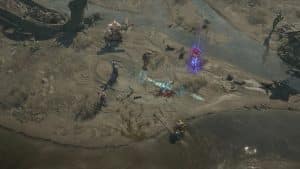
The open world of Diablo IV is structured as a continuous landscape divided into multiple regions connected by natural transitions instead of loading screens. Each area contains a blend of handcrafted main quests and dynamically generated side content. Players can choose to follow the main story or roam freely, discovering hidden dungeons, strongholds, and world events. Mounts significantly enhance mobility, turning exploration into a smoother, faster experience while adding new traversal mechanics like mounted combat.
Combat Mechanics and Skill Progression
Combat remains real-time and visceral, built upon fluid animations and impactful effects that make every encounter feel satisfying. Each class features unique mechanics Barbarians wield multiple weapons with switchable stances, while Druids morph between animal forms mid-battle. Skill trees encourage creative builds, while endgame Paragon Boards extend progression indefinitely, allowing fine-tuning of stats and abilities. Cooperative synergy between classes adds depth, encouraging teamwork in group activities like dungeons and PvP zones.
Dungeons, Events, and Endgame Content
The dungeons in Diablo IV are procedurally generated yet visually distinct, filled with traps, elite monsters, and bosses that test skill and endurance. Nightmare Dungeons, unlocked after completing the campaign, introduce modifiers that radically change gameplay conditions, ensuring long-term replayability. World events, like the colossal Ashava boss fights, bring communities together in intense cooperative battles. The endgame also features Helltide events, PvP zones known as Fields of Hatred, and the Tree of Whispers system, all designed to keep players invested long after the story ends.
Social Systems and Crossplay
Blizzard has integrated full crossplay across all platforms, allowing friends on different systems to join forces without restriction. The world includes hubs where players can trade, form clans, or simply rest before heading into the darkness again. Despite this social layer, Diablo IV maintains its gritty tone, ensuring that even shared experiences feel grounded in the desolation of Sanctuary rather than turning into overly bright MMO gatherings.
Graphics
Art Direction and Visual Identity
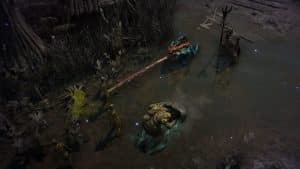
Diablo IV’s art style marks a clear return to the series’ gothic and macabre roots. Environments are drenched in shadow and texture, with weather systems and lighting effects enhancing the mood of despair. The color palette is muted yet striking, emphasizing blood, decay, and the faint glow of corrupted magic. Towns and ruins feel hand-carved and believable, each telling silent stories through environmental design.
Visual Effects and Animation
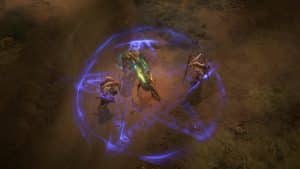
Combat animations carry weight and precision, making every sword swing, spell cast, and demonic explosion feel tangible. Particle effects are used sparingly to maintain readability, while blood splatter, crumbling bones, and firelight flickers amplify the sense of danger. Boss fights are visual spectacles, often framed by dramatic lighting and shifting terrain that reacts to the chaos of battle.
Performance and Optimization
The PC version of Diablo IV supports a wide range of hardware configurations, offering adjustable settings for resolution, texture detail, shadows, and ray tracing. High frame rate support ensures smooth performance even during chaotic fights. The game also includes accessibility features such as colorblind modes and UI scaling, ensuring inclusivity without compromising its grim aesthetic.
Pros and Cons
✔️ Pros
- Deep and flexible character customization across five distinct classes.
- A hauntingly beautiful open world filled with meaningful exploration.
- Responsive, satisfying combat with excellent visual feedback.
- Crossplay and shared-world integration that enhance replayability.
- Mature, emotionally resonant storytelling with cinematic presentation.
- Extensive endgame systems offering months of progression and challenge.
❌ Cons
- Some repetitive dungeon layouts and side activities over long play sessions.
- Always-online requirement can disrupt immersion for solo players.
- Balancing issues occasionally make certain builds feel underpowered.
- Sparse social tools compared to dedicated MMOs.
ℹ️ Game information


⭐ Installation Instructions
- The game is fully complete, you just need to install it, so there is no need to unpack it or download it from other sources.
- Just run the Diablo IV.exe installation file.
- Simply launch the game from shortcut desktop.
⚙️ System Requirements
✅ Minimum:
- OS: Windows 10 64-bit
- Processor: Intel® Core™ i5-2500K / AMD™ FX-8350
- Memory: 8 GB RAM
- Graphics: NVIDIA® GeForce® GTX 660 / Intel® Arc™ A380 / AMD Radeon™ R9 280
- DirectX: Version 12
- Network: Broadband Internet connection
- Storage: 90 GB available space
✅ Recommended:
- OS: Windows 10 64-bit
- Processor: Intel® Core™ i5-4670K / AMD Ryzen™ 1300X
- Memory: 16 GB RAM
- Graphics: NVIDIA® GeForce® GTX 970 / Intel® Arc™ A750 / AMD Radeon™ RX 470
- DirectX: Version 12
- Network: Broadband Internet connection
- Storage: 90 GB available space
Images

Video
Developer's games

Best Rated Games


